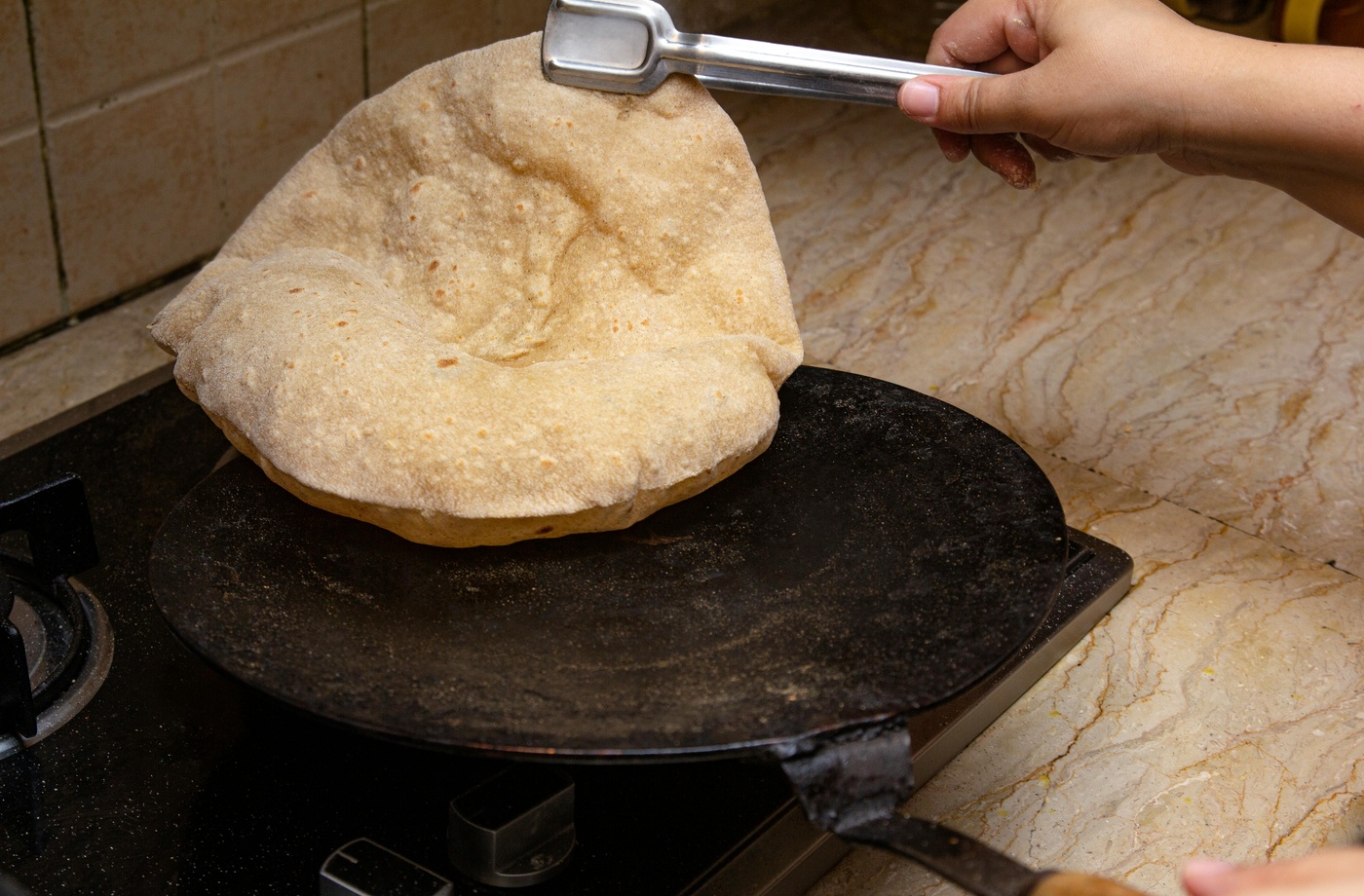
Naan is more than just a side—it’s the soft, chewy canvas that brings Indian meals together. Whether you’re scooping up dal, wrapping spicy kebabs, or wiping the last of your butter chicken from the bowl, naan is an essential part of the South Asian dining experience. But not all naan is created equal. Here’s what defines truly great naan—and where to find the best, freshest options.
What is naan?
Naan is a leavened flatbread traditionally cooked in a tandoor, a cylindrical clay oven. The intense heat and curved surface create charred bubbles and soft interiors that are hard to replicate with standard ovens. It’s typically made with all-purpose flour, yeast, yogurt (for tenderness), and sometimes milk or ghee.
Unlike roti or chapati (which are unleavened and whole wheat), naan is richer, fluffier, and often served brushed with butter or garlic.
The traits of a perfect naan
- Charred bubbles and blistered edges: Indicate tandoor-cooked authenticity
- Soft, elastic interior: Should be chewy but not doughy or dry
- Lightly crisp outside: Especially when served straight from the oven
- Balanced flavor: Not overly sweet or salty; mild enough to support strong curries
- Freshness: The best naan is served hot—stale naan loses its magic within minutes
For more detail on traditional naan technique, check The Kitchn’s homemade naan guide.
Types of naan to try
- Plain naan: A simple, buttery classic
- Garlic naan: Topped with minced garlic and herbs
- Cheese naan: Stuffed with gooey cheese—especially popular in Indo-British cuisine
- Keema naan: Filled with spiced minced meat, often lamb
- Peshwari naan: Sweet, stuffed with coconut, nuts, and raisins
Where to find freshly made naan
The best naan is made-to-order and cooked in a tandoor. You’ll find fresh naan at:
- Authentic Indian restaurants that use traditional clay ovens. Many North Indian and Mughlai-style spots prioritize fresh tandoor breads—check platforms like Zomato or Yelp for reviews that mention in-house tandoors.
- Indian bakeries or takeout counters with high turnover
- South Asian grocery stores like Patel Brothers or [Apna Bazaar], which may offer fresh naan during lunch and dinner hours
Avoid pre-packaged naan from standard supermarkets if you want the authentic texture and flavor—these are often shelf-stable and lack the tandoori char.
Can you make it at home?
Yes—while you won’t replicate the tandoor, stovetop or oven-baked naan can get close. Use cast iron pans for heat retention and broil for a few seconds to mimic blistering. Recipes that use yogurt or milk in the dough will help keep the texture soft.
Find detailed recipes at Serious Eats and BBC Good Food.
Final thoughts
A truly great naan balances texture, temperature, and timing. Fresh from the tandoor, it elevates the entire meal—acting as utensil, comfort, and flavor-enhancer all at once. Whether you’re dining out or trying your hand at home cooking, seek out naan made fresh and served warm for the best experience possible.